If you’re living off-grid, prepping for emergencies, or simply want reliable family communication beyond cell service, a GMRS license is one of the smartest (and easiest) investments you can make. General Mobile Radio Service (GMRS) radios offer higher power, better range, and repeater support compared to license-free FRS radios — but the FCC requires a license to operate legally on these frequencies.
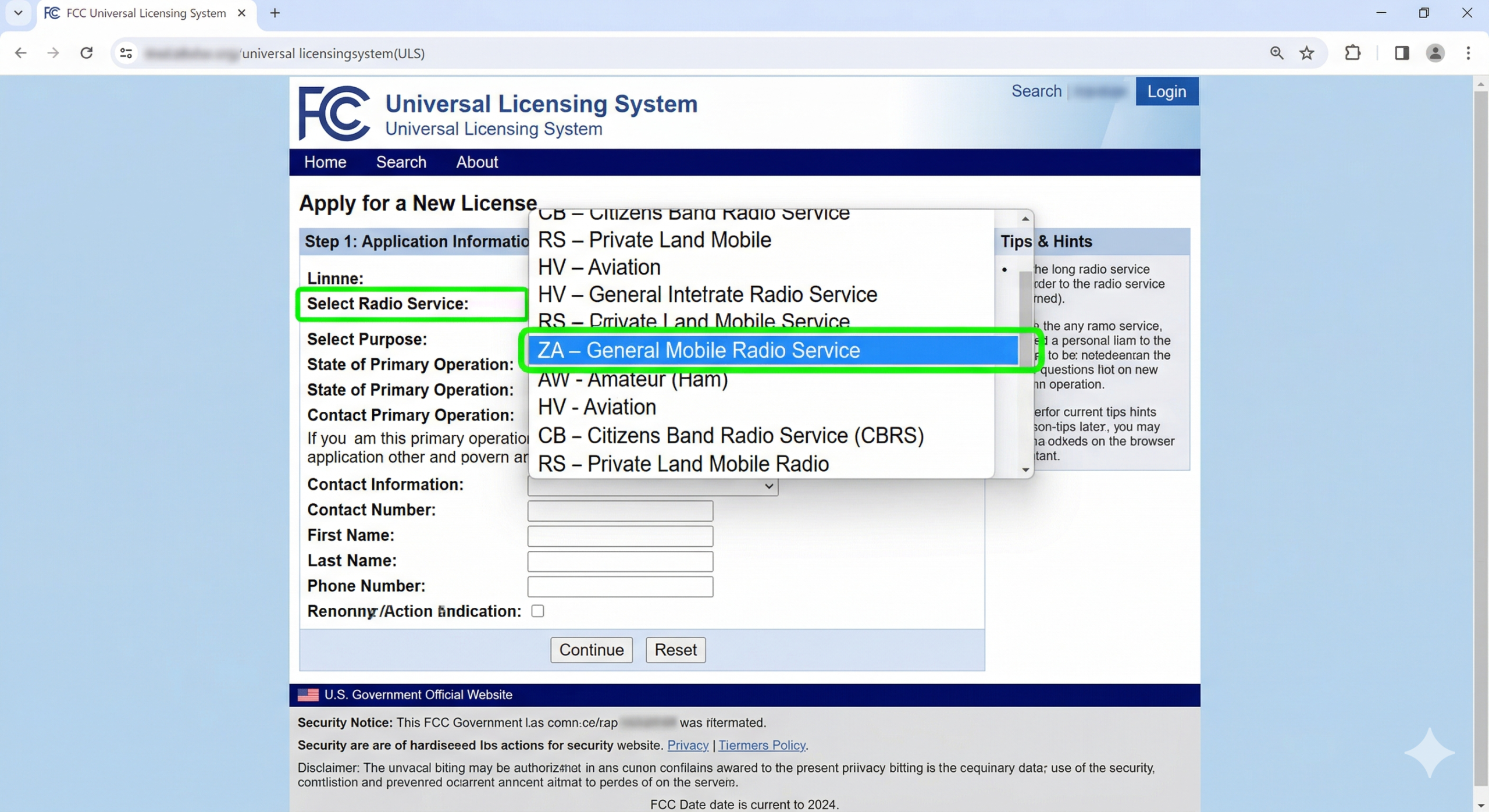
The good news? Getting a GMRS license is straightforward, requires no exam, costs only $35, and lasts 10 years. One license covers your entire immediate family (including kids of any age). In this detailed guide, we’ll walk you through everything: why you need it, the exact application process, official links, operating rules, and the full GMRS frequency table.
Why GMRS for Off-Grid Life?
GMRS is perfect for rural ranches, hiking in the Hill Country, or SHTF scenarios where cell towers are down. With handheld, mobile, or base station radios (and repeaters), you can communicate 5–50+ miles depending on terrain, antennas, and power.Type your paragraph here
What Is GMRS and Do You Need a License?
GMRS is a VHF/UHF radio service (around 462–467 MHz) for short-distance, two-way voice and limited data communications. It’s designed for personal and family use — think hiking groups, farm operations, neighborhood watches, or off-grid homesteads.
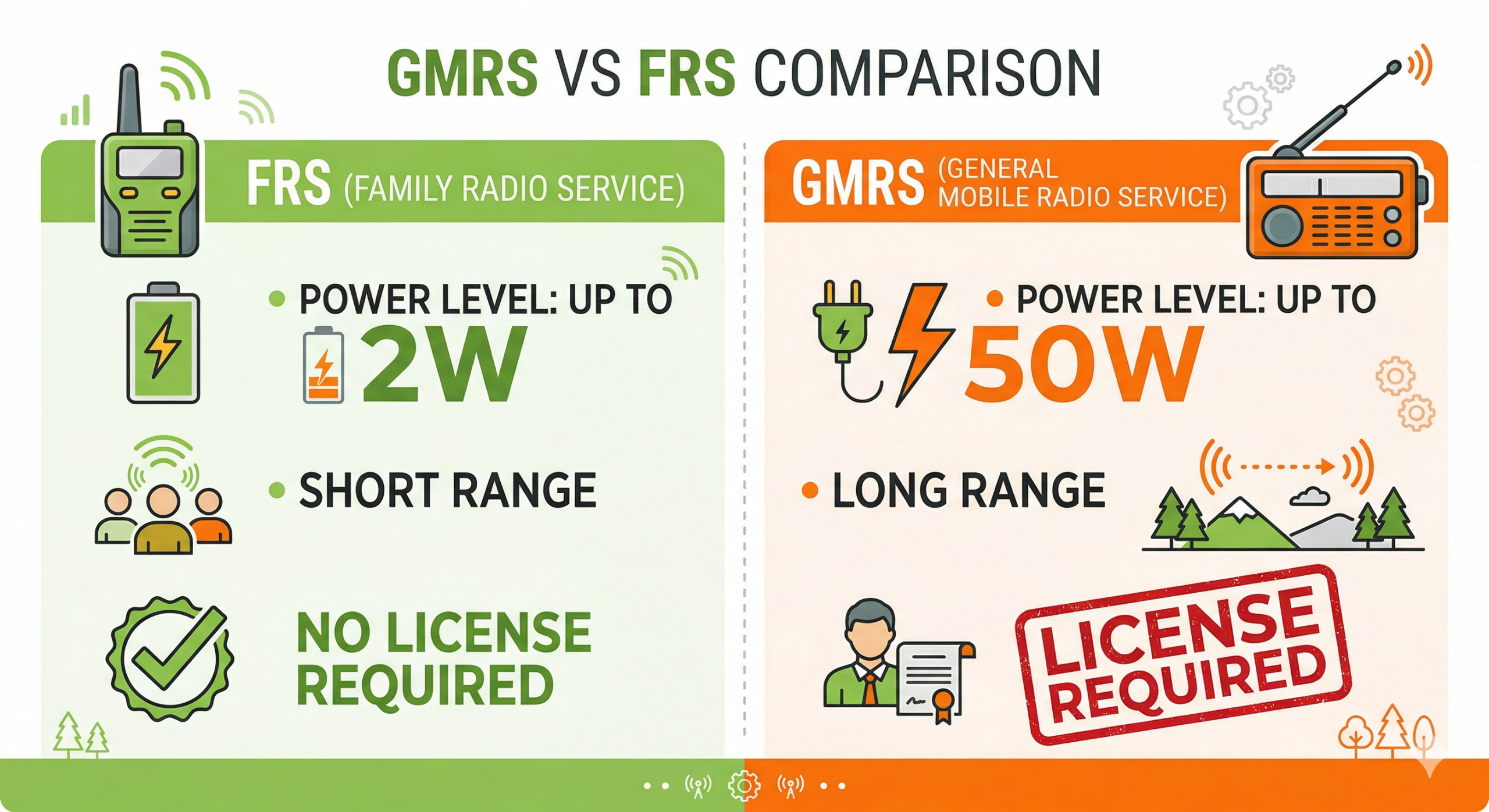
– FRS (Family Radio Service) = No license required, but max 2 watts on most channels and very limited range.
– GMRS = License required, up to 50 watts on many channels, repeater capability, and dramatically better range.
Yes — you need a license to transmit on GMRS frequencies at full power or to use repeaters. Operating without one can result in FCC fines.
Who can apply?
You must be 18 years or older and not a representative of a foreign government.Once licensed, any immediate family member (spouse, children, parents — any age) can legally operate your GMRS stations.