

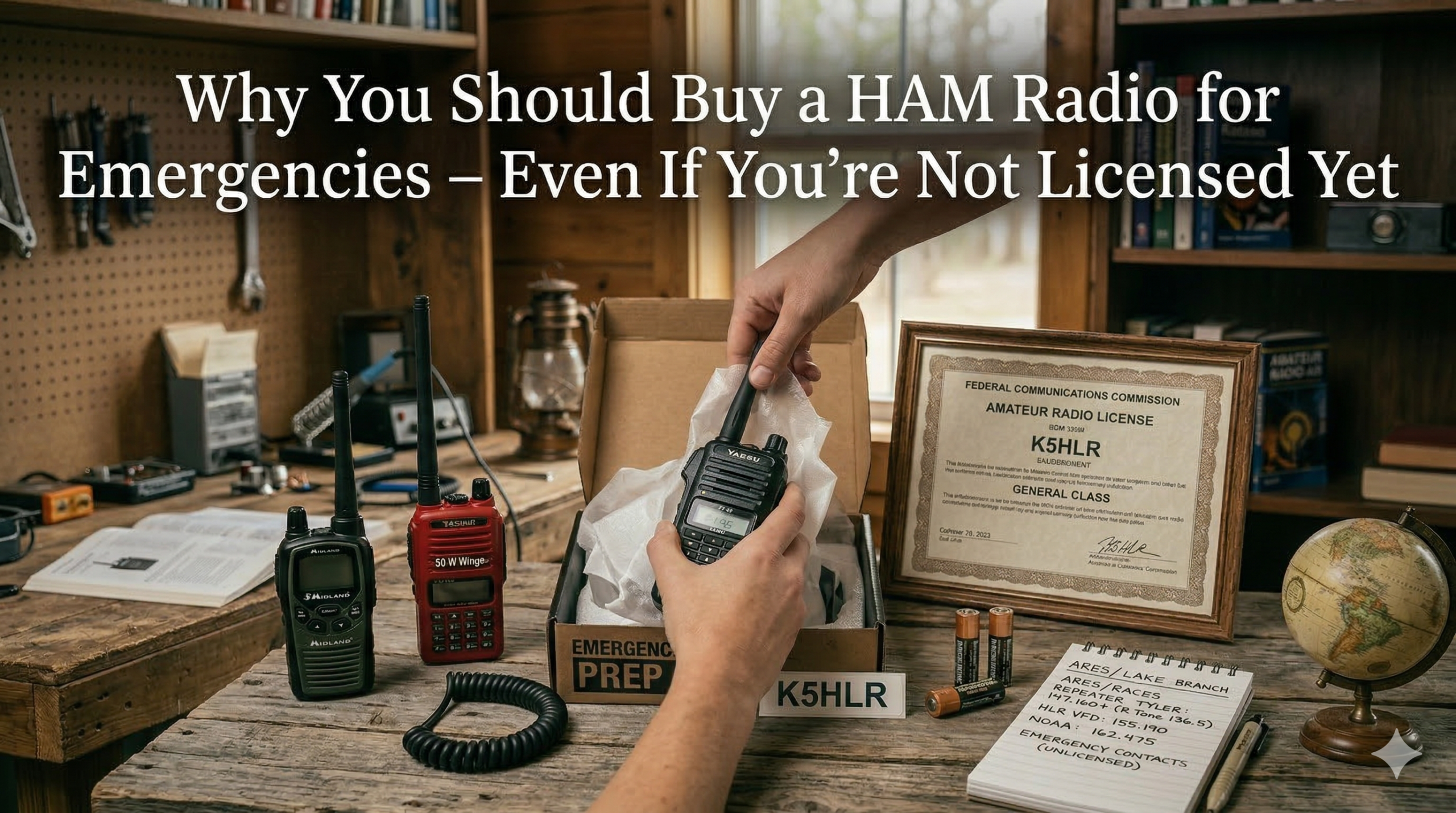
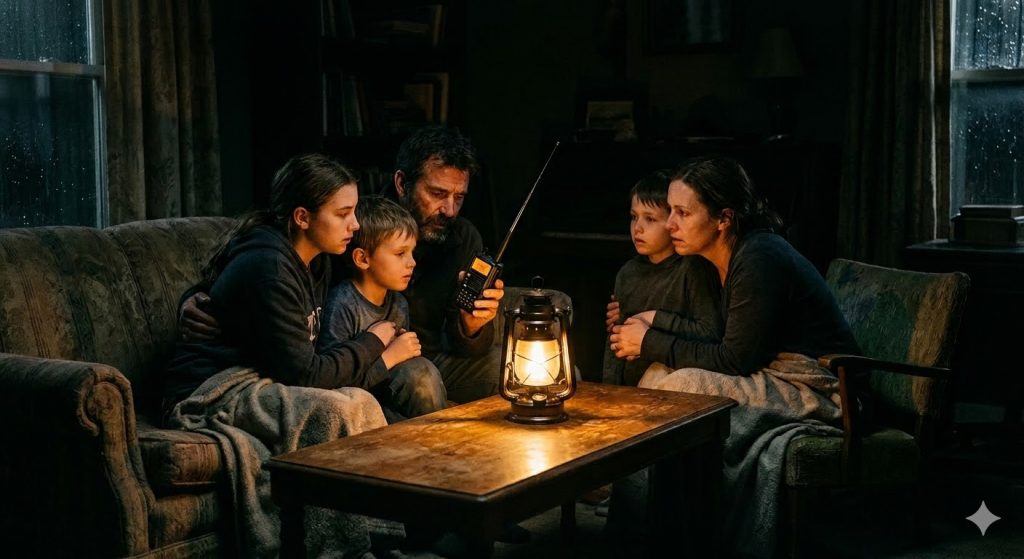
Picture this: Hurricane-force winds howl outside, cell towers are down, power is out for days, and your phone is a useless brick. Floodwaters isolate your neighborhood, roads are washed out, and 911 lines are overwhelmed. In those terrifying moments during the 2024 Hurricanes Helene and Milton on the U.S. East Coast and the devastating 2025 central Texas floods, thousands of families faced exactly that scenario. Yet one tool kept working when everything else failed: HAM radio.
You don’t need a license to buy one and keep it ready. You don’t even need to transmit right away. But having a HAM radio in your emergency kit could literally save your life — or your neighbor’s — the next time disaster strikes. Here’s why every off-grid prepper, rural homeowner, or anyone in a hurricane- or flood-prone area like Texas should own one today.
When Cell Phones Die, HAM Radio Saves Lives: Real Stories from Recent Disasters
In September 2024, Hurricane Helene slammed into western North Carolina, knocking out power, cell service, and roads for weeks. More than 200 people died, entire towns were cut off, and families had no way to call for help or check on loved ones.
That’s when licensed amateur radio operators stepped up — but the beauty is, their radios worked for everyone nearby too. Thomas Witherspoon (call sign K4SWL) in Buncombe County had his HAM setup powered by a fresh solar array. With cell service gone and even 911 offline, he used the powerful Mt. Mitchell repeater to request a helicopter drop of critical supplies for his road. The response? Immediate: “Thomas, we’ll take care of that for you tomorrow.” He then handed out handheld radios to neighbors so they could stay in the loop. As Witherspoon put it, amateur radio became the family’s “superpower” when modern tech completely collapsed.
Across the region, operators coordinated welfare checks, relayed requests for insulin and medication, announced when stores reopened, and passed “I’m safe” messages to distant relatives. In Asheville and surrounding areas, Amateur Radio Emergency Service (ARES) volunteers worked side-by-side with first responders through NC AUXCOMM, using mountaintop repeaters, HF frequencies, and the Winlink digital system to move life-saving information when commercial networks were dead.
Hurricane Milton followed right after, and Florida operators were already prepared — launching nets and deploying to shelters before the storm hit. The same story played out: when cell dead zones lingered, HAM radio filled the gap.
Fast-forward to July 2025 in central Texas. Catastrophic flooding hit Kerr and Kendall Counties hard. ARRL ARES teams activated on July 4, embedding with local agencies and search-and-rescue squads. They provided communications for overwhelmed phone systems, passed dozens of health-and-welfare messages to frantic families, and supported Red Cross reunification shelters. Ten hams rode with SAR teams, turning radio into the lifeline that kept rescuers connected in terrain where cell signals never reached.
These aren’t hypotheticals. Real people survived because someone had a radio when nothing else worked. Key coverage:
Why Buy a HAM Radio Even If You’re Not Licensed (Yet)
Here’s the part most people miss: You can legally own and use a HAM radio for listening without any license at all.
- Receive-only mode is 100% legal. Scan emergency nets, listen to weather reports, or monitor local repeaters during a crisis.
- In a true life-or-death emergency, anyone can transmit. FCC rules explicitly allow it (Part 97.403): if human life or property is in immediate danger, you can use any radio on any frequency to call for help. No license required in that moment.
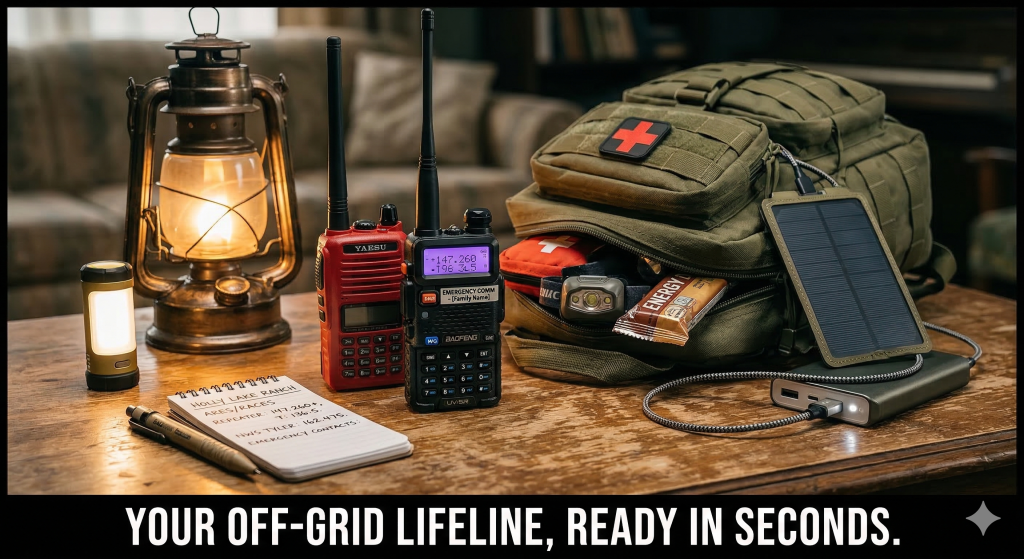
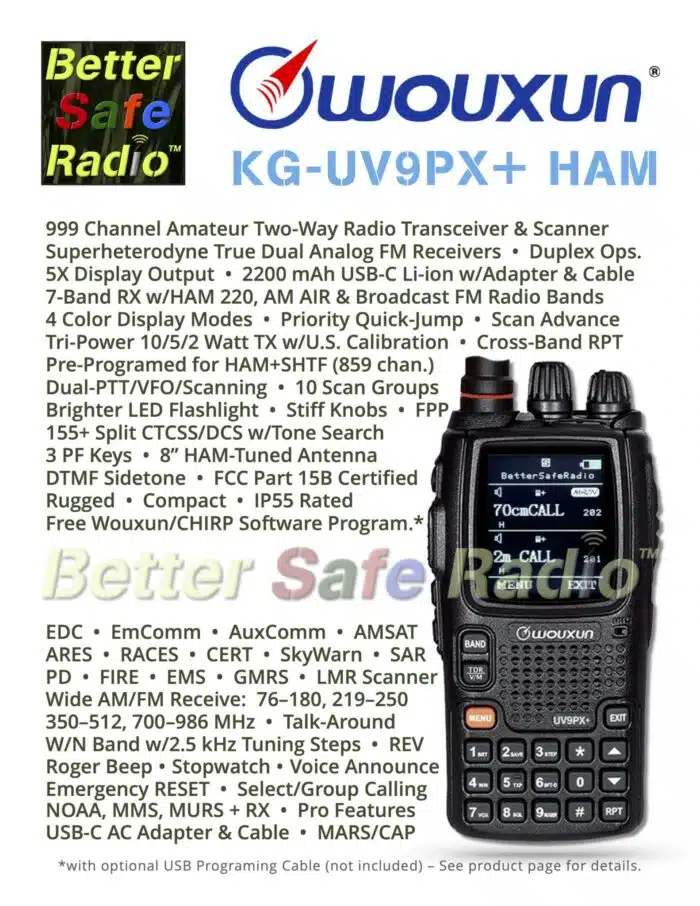
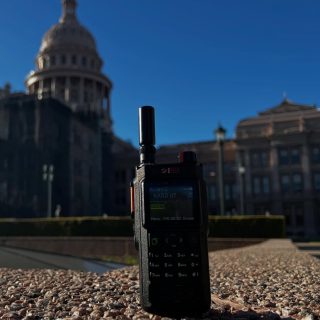
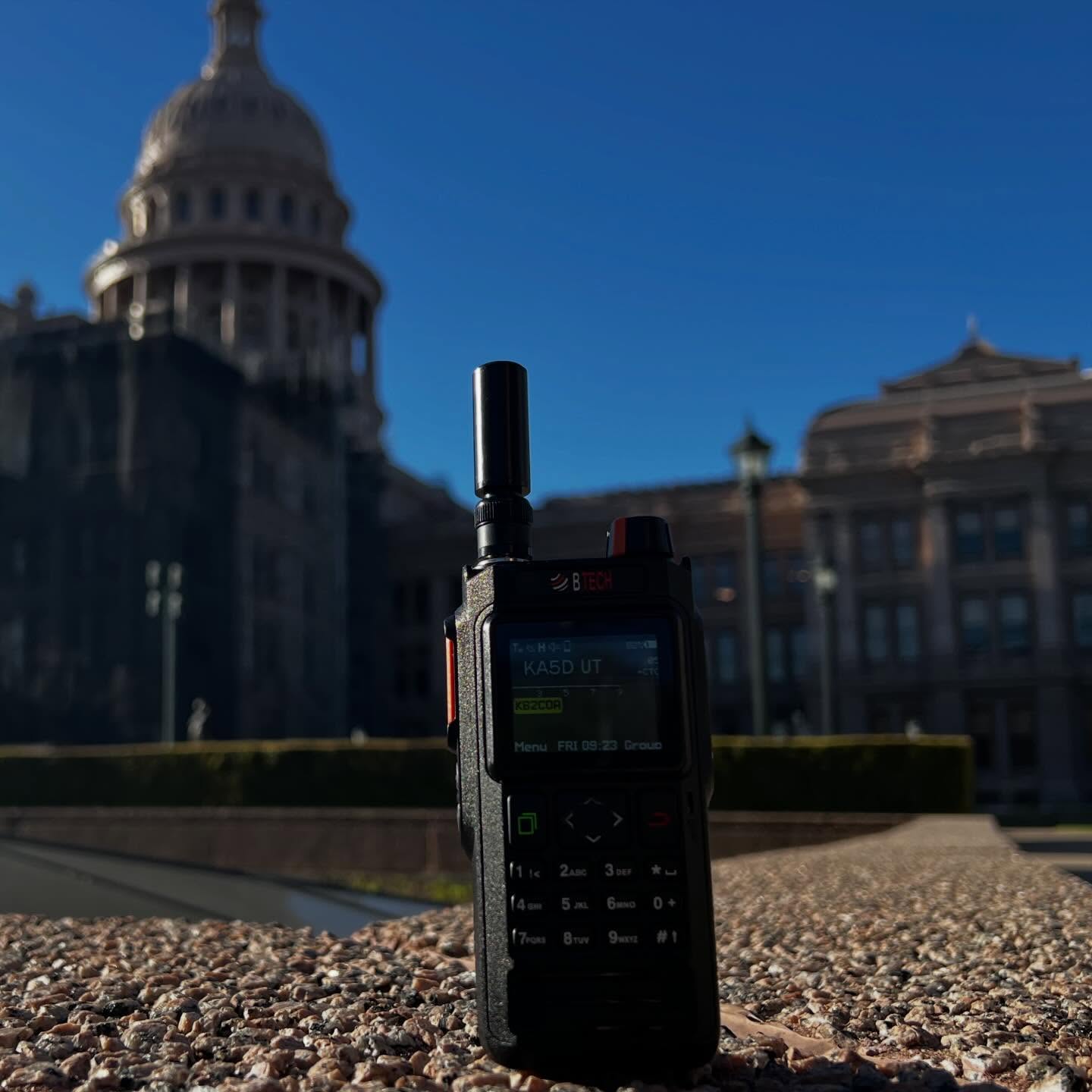
- Affordable entry point: Solid handheld radios start under $30–$50 (popular “Baofeng” style models). Pair with a cheap external antenna and a solar USB charger, and you’re set for days off-grid.
Preppers and off-grid families in Texas and the Southeast are already stocking these because they work when Starlink, cell boosters, and generators fail. One radio in your truck or bug-out bag gives you eyes and ears on what’s really happening — not what the overwhelmed 911 dispatcher can tell you.
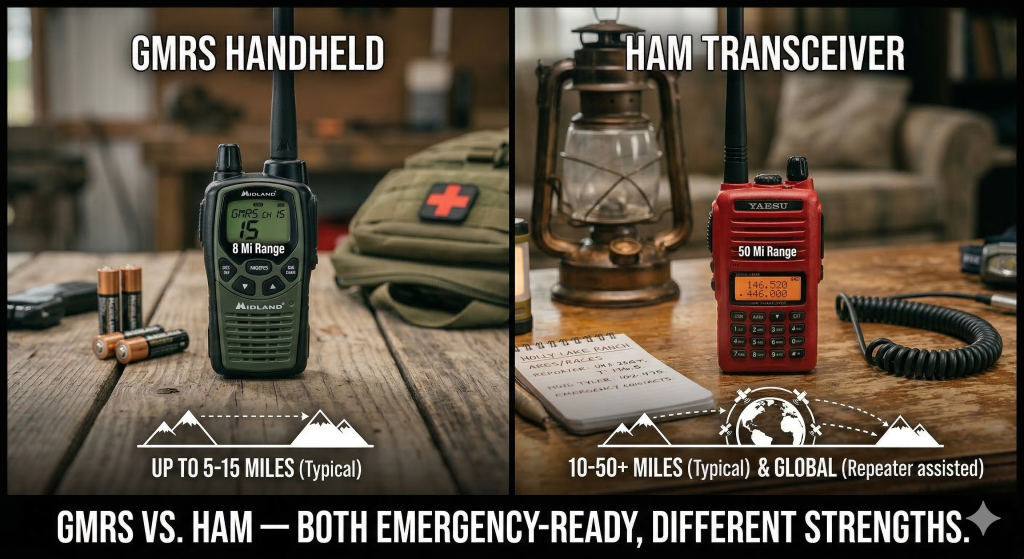
GMRS: A Simpler, No-Test Alternative That Still Shines in Emergencies
If the idea of studying for a license feels intimidating, GMRS (General Mobile Radio Service) is an excellent “gateway” radio system that’s still incredibly powerful for emergencies.
Key differences from HAM radio:
- No exam required — Just buy a $35 FCC license (covers your whole family for 10 years).
- Simpler operation — 22 main channels + repeater access on UHF/VHF. Higher legal power (up to 50 watts mobile) than FRS walkie-talkies.
- Shorter range than HAM HF — Great for 5–50+ miles line-of-sight or via repeaters, perfect for family coordination in a neighborhood or during evacuation.
- Legal to transmit immediately (once licensed).
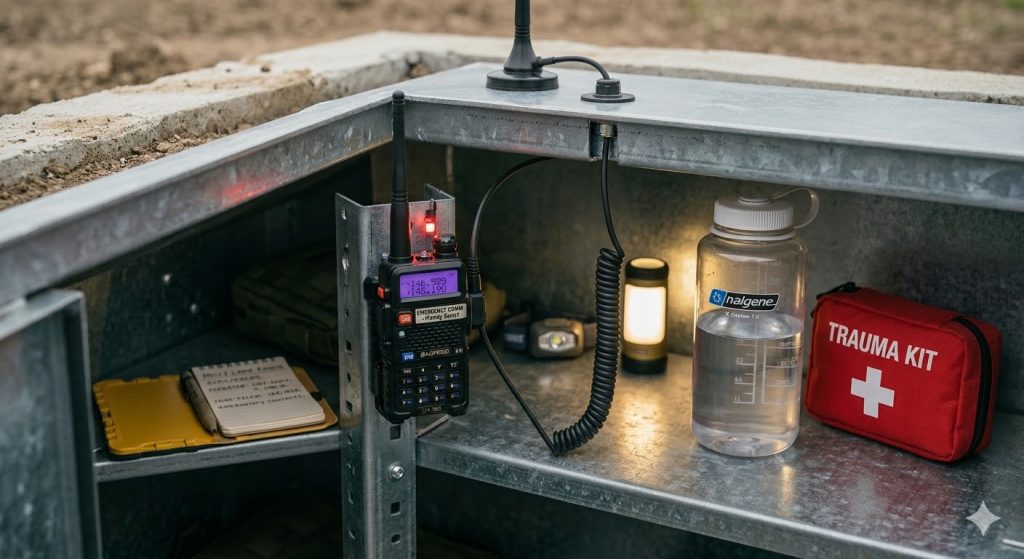
GMRS radios are rugged, waterproof, and often come in family packs. During the Texas floods and East Coast hurricanes, GMRS users relayed local info, checked on neighbors, and bridged gaps until HAM operators or official teams arrived.
Bottom line: GMRS is easier to jump into right now for short-range family comms. HAM gives you global reach, digital modes, and deeper integration with official emergency networks (ARES/RACES). Many preppers own both — GMRS for daily family use and quick emergency chatter, HAM for when things get really bad.
The Extra Benefits of Getting Your HAM License
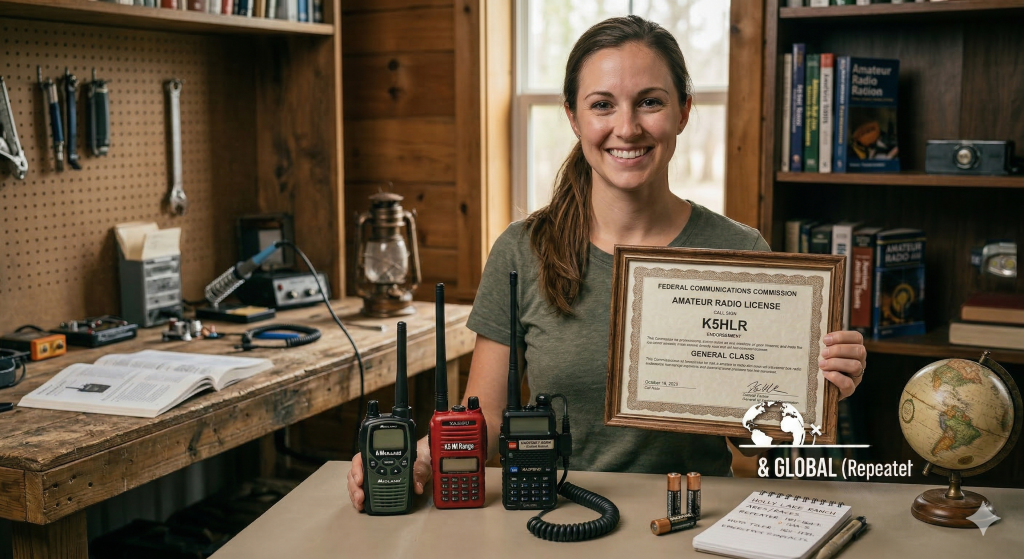
Once you decide to level up, passing the Technician exam (about 35 questions, mostly multiple-choice) unlocks a world of capability:
- Legal transmitting anytime — Not just in emergencies. Join local nets, practice, and build skills before the next storm.
- Wider frequencies and modes — HF bands let you reach hundreds or thousands of miles (great for calling family across states when local repeaters fail). Digital modes like Winlink turn your radio into an email system.
- Official emergency integration — Join ARES or RACES groups. Trained operators get deployed alongside first responders — exactly what happened in North Carolina and Texas.
- Community and knowledge — Local clubs offer free training, antenna help, and “Elmer” mentors. You’ll meet the people who already know how to keep communications alive in disasters.
- Future-proof investment — Your license never expires (renew every 10 years), and the same radio grows with you.
The best part? Studying takes most people just a few weeks using free apps and practice tests. Many hams say the license is the single best upgrade to their emergency plan.
Don’t Wait for the Next Hurricane or Flood
Recent disasters proved it again: cell phones and internet are fragile. A simple, battery-powered HAM radio (or GMRS system) gives you independence when everything else goes dark.
Start small: Grab an affordable handheld today, learn to listen on local repeaters, and build your emergency kit around it. If you’re in Texas or the Southeast, you already know storms don’t wait for permission.
Your family’s safety isn’t about waiting for the perfect moment — it’s about being ready right now. A HAM radio might just be the smartest, cheapest insurance policy you’ll ever buy.
What’s stopping you? Drop a comment below if you already have a radio (or GMRS setup) — we’d love to hear your go-bag tips!



Leave a Reply